The Ultimate Guide To Companion Planting Watermelons
The Ultimate Guide to Companion Planting Watermelons
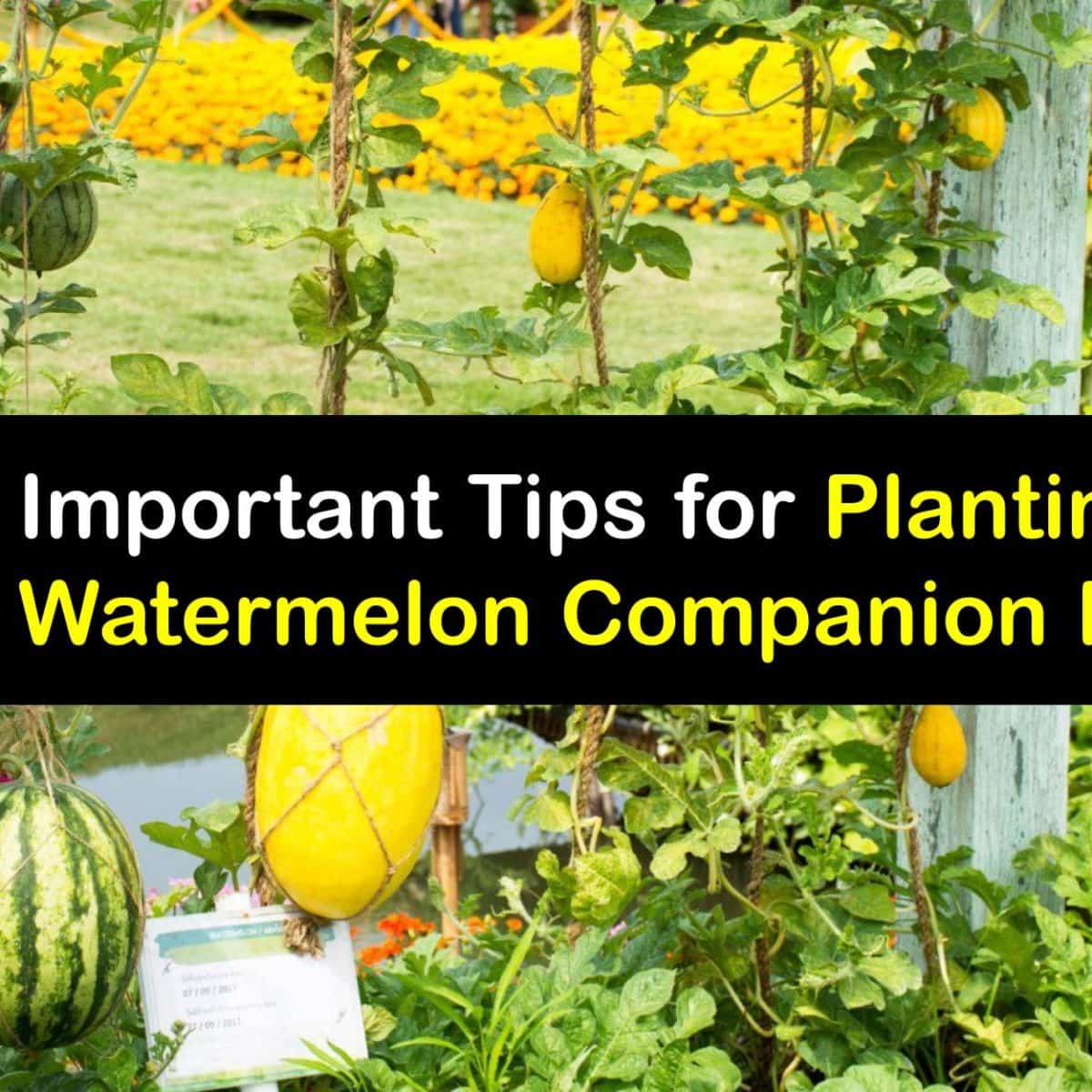
Watermelons are a delicious and refreshing summer fruit, but they can be tricky to grow. One way to improve your chances of success is to use companion planting. Companion planting is the practice of planting different types of plants together that benefit each other.
There are several benefits to companion planting watermelons. First, it can help to deter pests and diseases. Some companion plants, such as marigolds and nasturtiums, release chemicals that repel pests. Others, such as garlic and onions, have strong scents that can confuse pests and make them less likely to attack your watermelon plants.
Second, companion planting can help to improve the soil. Some companion plants, such as legumes, fix nitrogen in the soil, which can provide a valuable nutrient for watermelons. Others, such as leafy greens, help to suppress weeds and improve drainage.
Third, companion planting can help to improve pollination. Some companion plants, such as lavender and borage, attract bees and other pollinators, which are essential for watermelons to set fruit.
So, what are the best companion plants for watermelons? Here are a few of the most popular options:
- Marigolds: Marigolds are one of the best companion plants for watermelons. They release chemicals that repel pests, such as cucumber beetles and squash bugs.
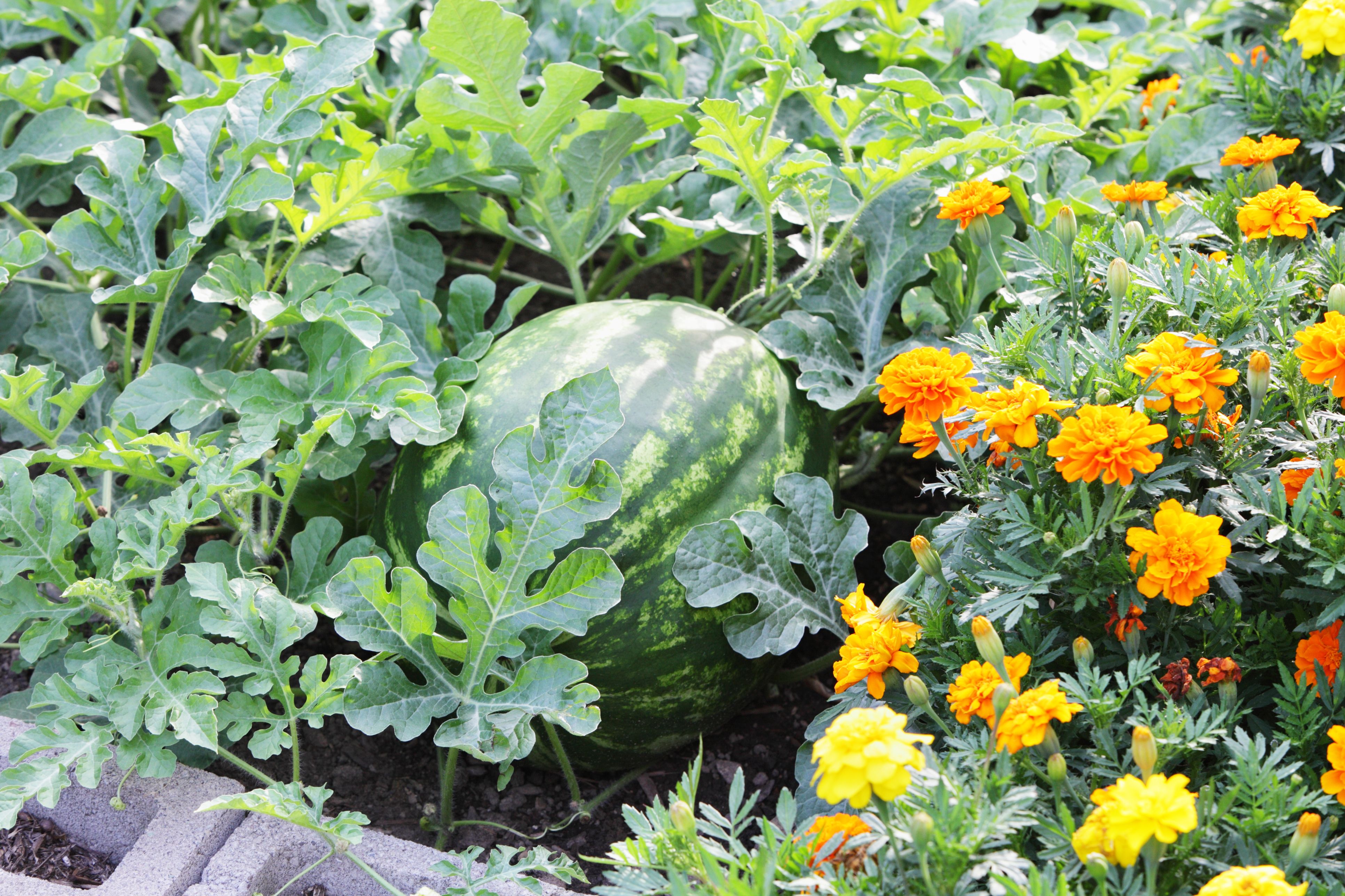
- Nasturtiums: Nasturtiums are another great companion plant for watermelons. They also release chemicals that repel pests, and they can help to improve the soil by suppressing weeds.
- Garlic: Garlic is a strong-scented herb that can confuse pests and make them less likely to attack your watermelon plants. It can also help to improve the soil by suppressing weeds and improving drainage.
- Onions: Onions are similar to garlic in that they have a strong scent that can deter pests. They can also help to improve the soil by suppressing weeds and improving drainage.
- Beans: Beans are legumes, which means they fix nitrogen in the soil. This can provide a valuable nutrient for watermelons, and it can also help to improve the overall health of the soil.
- Lettuce: Lettuce is a fast-growing plant that can help to suppress weeds and improve the soil. It can also help to attract pollinators, which are essential for watermelons to set fruit.
- Herbs: Many herbs, such as basil, oregano, and mint, make great companion plants for watermelons. They help to repel pests, improve the soil, and attract pollinators.
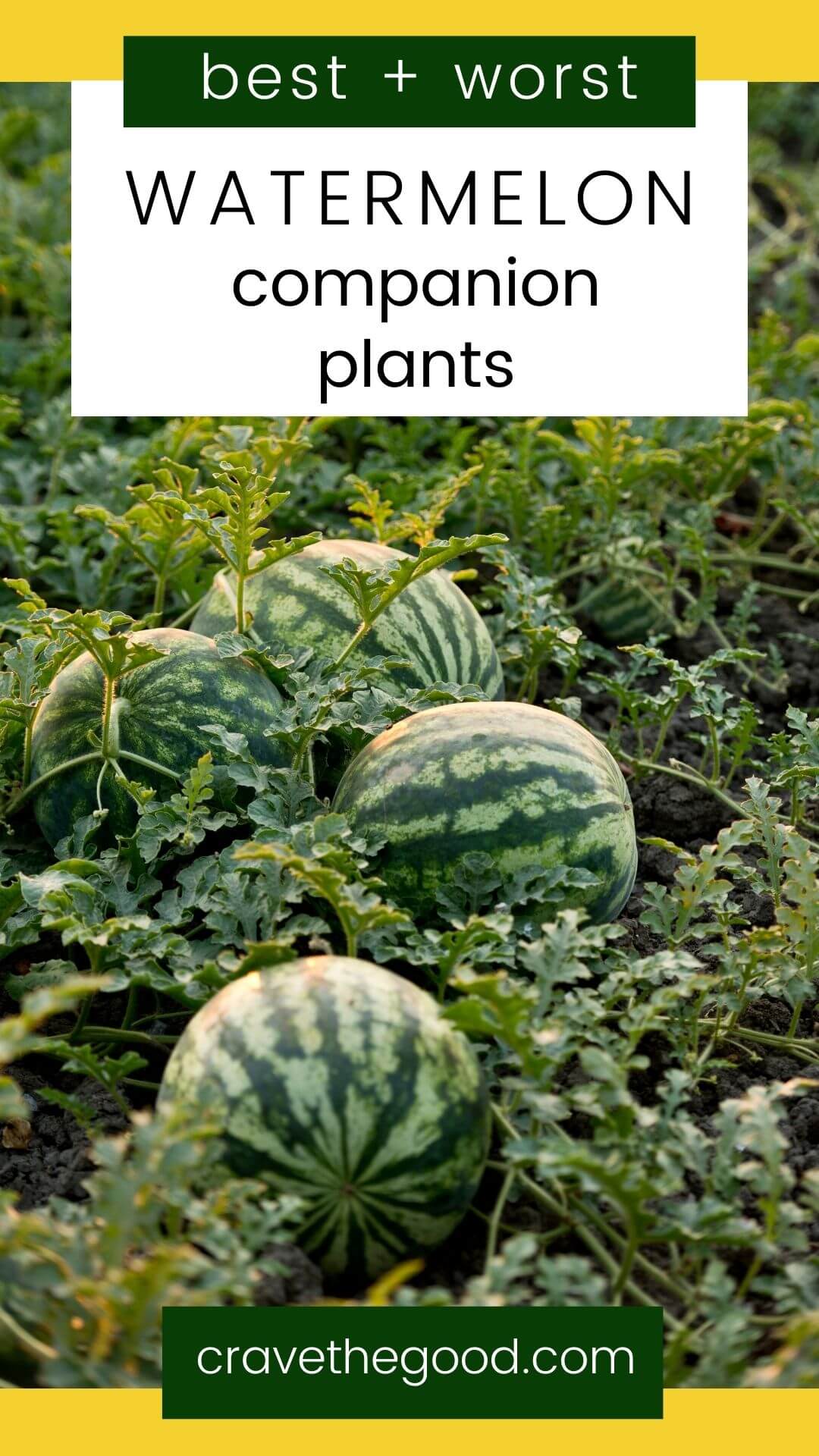
In addition to these plants, there are a few other that you should avoid planting near watermelons. These include:
- Cucumbers: Cucumbers are closely related to watermelons, and they can compete for resources. They are also susceptible to the same pests and diseases, so planting them near watermelons can increase the risk of problems.
- Squash: Like cucumbers, squash is closely related to watermelons and can compete for resources. They are also susceptible to the same pests and diseases, so planting them near watermelons can increase the risk of problems.
- Potatoes: Potatoes can attract the Colorado potato beetle, which is a major pest of watermelons. It is best to avoid planting potatoes near watermelons.
Watermelons are a delicious and refreshing summer treat, but they can be susceptible to pests and diseases. One way to help protect your watermelon plants is to plant them with companion plants. Companion plants are those that benefit each other when they are grown together. For watermelons, some of the best companion plants include:
- Herbs: Basil, mint, and rosemary all help to repel pests.
- Flowers: Marigolds, nasturtiums, and lavender attract pollinators, which help to pollinate the watermelon flowers.
- Other vegetables: Beans, corn, and radishes help to improve the soil quality.
To learn more about the best companion plants for watermelons, please visit Garden Wiki. This website has a comprehensive list of companion plants, as well as information on how to plant and care for watermelons.
FAQ of best companion plants for watermelon
Q: What are the best companion plants for watermelon?
A: The best companion plants for watermelon are herbs, lettuces, marigolds, nasturtiums, and radishes. These plants help to deter pests, attract pollinators, and improve the soil quality.
Q: What are some of the benefits of companion planting with watermelon?
A: There are many benefits to companion planting with watermelon. Some of the benefits include:
- Deterrent to pests: Some companion plants, such as marigolds and nasturtiums, help to deter pests from watermelon plants.
- Attraction of pollinators: Other companion plants, such as lavender and borage, attract pollinators, which help to pollinate watermelon flowers and improve fruit production.
- Improved soil quality: Some companion plants, such as beans and peas, help to improve the soil quality, which can benefit watermelon plants.
Q: What are some of the worst companion plants for watermelon?
A: Some of the worst companion plants for watermelon include cucumbers, squash, and potatoes. These plants are susceptible to the same pests and diseases as watermelon, so planting them together can increase the risk of infestation.
Q: How do I plant companion plants with watermelon?
A: When planting companion plants with watermelon, it is important to consider the size and growth habits of both plants. For example, marigolds and nasturtiums are both relatively small plants that can be planted close to watermelon plants. However, beans and peas are larger plants that need more space, so they should be planted further away from watermelon plants.
Q: What are some other tips for companion planting with watermelon?
A: Here are some other tips for companion planting with watermelon:
- Plant companion plants in the same bed as watermelon plants.
- Interplant companion plants with watermelon plants.
- Rotate companion plants each year.
- Water and fertilize companion plants as needed.

Post a Comment for "The Ultimate Guide To Companion Planting Watermelons"